
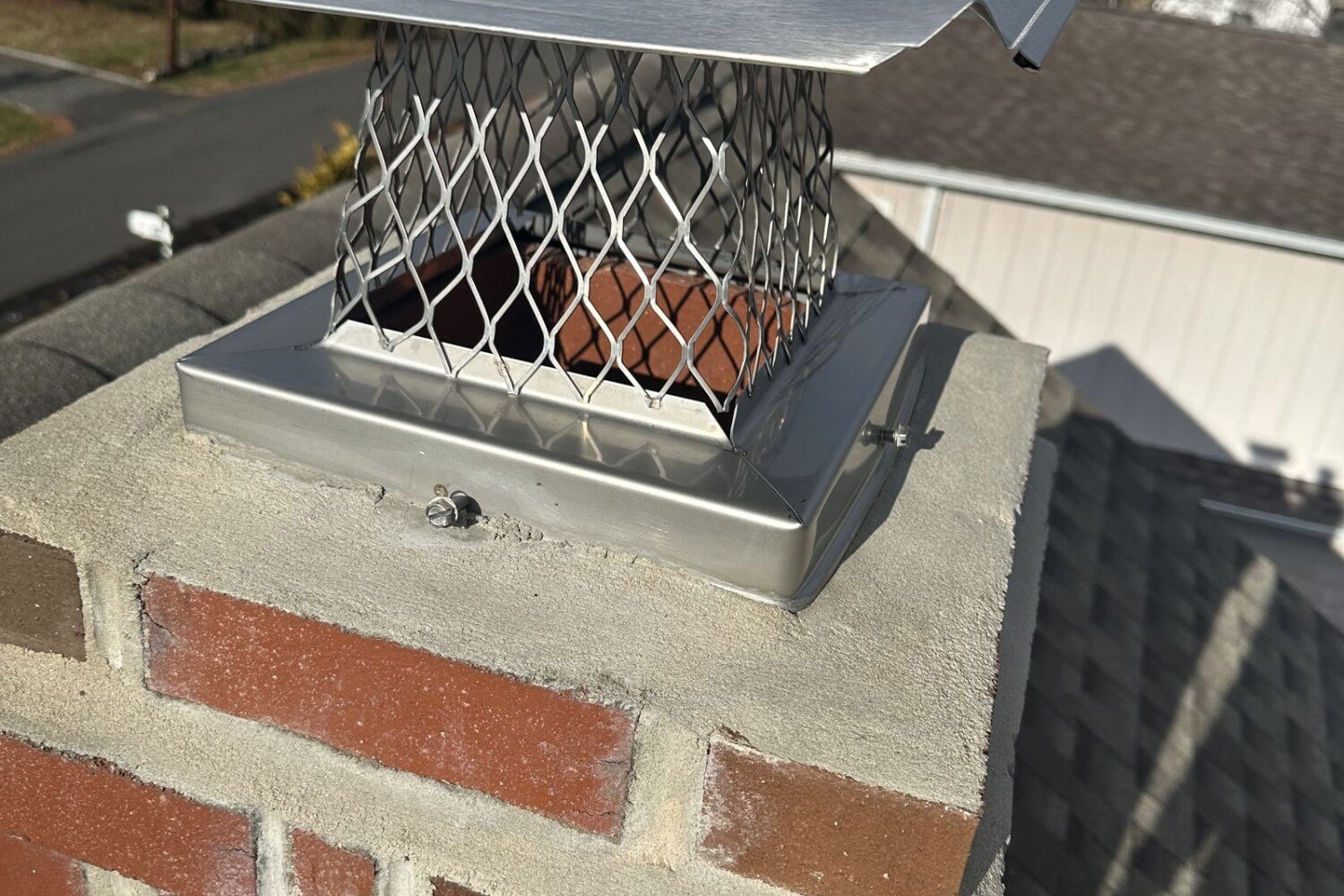
Look at the top of most chimneys in New Jersey and you will see a small metal “hat” over the flue. That is a chimney cap, and it does more than most homeowners realize. Here is what it does and how to tell if yours needs attention.
Key takeaways
- A chimney cap keeps rain and snow out of the flue.
- Its screen blocks birds, squirrels, raccoons and debris.
- It helps protect the chimney crown and masonry from water damage.
- Stainless steel caps outlast galvanized caps.
1. It Keeps Water Out
An uncapped flue is an open hole in your roof. Rain and snow fall straight in, rusting the damper and firebox, soaking the masonry and eventually causing stains and leaks inside the house. In New Jersey’s freeze-thaw winters, that water also freezes and breaks the brick and mortar apart. Water entry is one of the most common reasons we end up doing chimney repair.
2. It Keeps Animals Out
To birds, squirrels and raccoons, an open chimney looks like a perfect nest. The mesh screen on a cap keeps them out, which prevents blockages, odors and costly animal removal.
3. It Blocks Debris
Leaves, twigs and nesting material can collect in an uncapped flue. In homes with heavy tree cover, as in much of Bergen, Passaic and Morris counties, a cap helps keep the flue clear.
4. It Helps Protect the Crown
The chimney crown is the concrete or mortar top that covers the masonry. A cap shields the flue opening and part of the crown from direct rain and snow, helping a sound crown last longer.
5. Spark Protection
For wood-burning fireplaces, the cap’s screen helps keep embers from landing on the roof or nearby trees.
Signs Your Chimney Needs a New Cap
- There is no cap at all
- The cap is rusted, bent or loose
- The screen is torn or clogged
- You hear animals in the chimney
- You find water in the firebox after rain
Single-Flue vs. Multi-Flue Caps
A chimney with one flue usually gets a single-flue cap that fits over the flue tile. Chimneys with two or more flues often get a larger cap that covers the whole top of the chimney. We size each cap to the chimney so it fits securely and stays put in high winds.
Cap, Crown and Flashing Work Together
A cap alone will not stop every chimney leak. Cracked crowns, failed chimney flashing and worn mortar joints let water in too. We inspect all of them and explain what your chimney actually needs. Read more: Why is my roof leaking around the chimney?
Ambassadors Construction installs stainless steel chimney caps across New Jersey, usually in a single visit. Call for a free estimate.
Frequently Asked Questions
Is a chimney cap required?
Not every home is required to have one, but most chimneys benefit from a cap because it prevents water, animal and debris problems that are far more expensive to fix.
What is the difference between a chimney cap and a chimney crown?
The crown is the concrete or mortar slab that covers the top of the masonry. The cap is the metal cover with a screen that sits over the flue. They work together to keep water out.
How long does a stainless steel chimney cap last?
A good stainless steel cap can last many years and resists rust far better than galvanized steel.
Need a roofer in New Jersey?
Get a free, photo-documented roof inspection and written estimate. Right now: 15% off any roof repair and $1,500 off a new roof.